PAUL NASH
AND HIS PHOTOGRAPHY
Paul Nash
called the pocket camera his wife had given him in 1931, as
they set sail for America, 'a new eye'. From the very start
he used the camera as a resource and an inspiration for his
painting; as a new way of seeing the world.
Many of the thousands of photographs he took were taken in
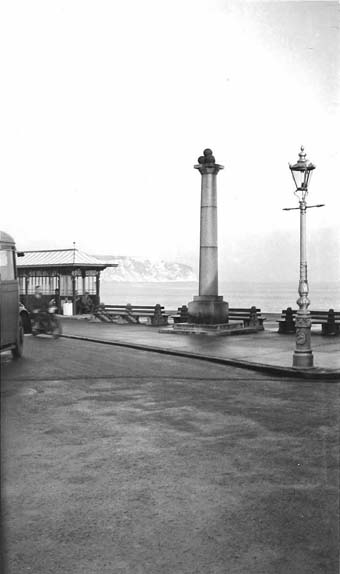
Swanage and the Isle of Purbeck. Some were taken in the
course of his research for the Dorset Shell Guide of 1936.
Some were reference tools to be used in his studio,
especially as he became increasingly disabled with asthma.
Some were still lives of stones, weathered branches and
other objects; images which later appeared in his paintings.
Some were experiments in new forms of art such as the
collage. Others were personal re-interpretations of nature
and the landscape as with his studies of stone walls and
quarry huts near Swanage and at Worth.
Nash seems to have regarded his photography solely as an
adjunct to his work as a painter and designer. Since his
death his photographs have been increasingly admired as
works of art and several exhibitions devoted only to his
photographs have been arranged.
Pennie Denton's book Seaside Surrealism: Paul Nash in
Swanage is generously illustrated with photographs by
Nash.
See also Andrew Causey, Paul Nash's Photographs.
Document and Image. 1973.
|